
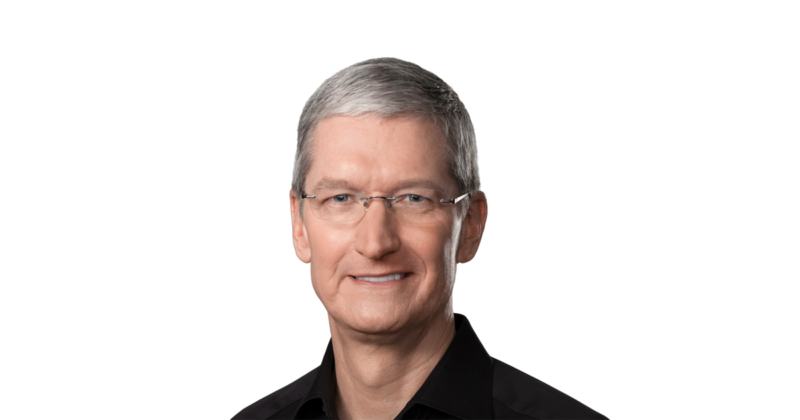
For most of the past 15 years, the hardest question surrounding Tim Cook was whether he could follow Steve Jobs.
He answered it by building a different kind of Apple.
Cook didn’t replicate Jobs’s theatrical product instincts or preside over another invention quite as culturally disruptive as the Macintosh, iPod or iPhone. Instead, the industrial engineer from Alabama took the company Jobs rebuilt and turned it into something larger, steadier and considerably more valuable: a global consumer-technology machine with more than 2.5 billion active devices, a services business generating more than $100 billion a year and a market value that has crossed $4 trillion.
On Sept. 1, Cook will relinquish the chief executive’s office to John Ternus, Apple’s longtime hardware chief. Cook, 65, will become executive chairman, remaining close enough to the company to help with areas including relationships with policymakers around the world. Arthur Levinson, Apple’s nonexecutive chairman for the past 15 years, will become lead independent director, while Ternus joins the board. Apple says the transition was the product of a long-term succession process unanimously approved by directors.
That makes this less a retirement than a transfer of operating authority.
For shareholders, it also begins a new experiment. The question is no longer whether Cook successfully followed Jobs. It is whether the company Cook created can retain the growth, valuation and institutional confidence associated with him after somebody else occupies the CEO’s chair.
The Operator
Cook arrived at Apple in 1998, when joining the company wasn’t an obviously brilliant career move.
He had spent 12 years at IBM, eventually working in manufacturing and distribution, and later held senior operating positions at Intelligent Electronics and Compaq. He had an industrial-engineering degree from Auburn University and an MBA from Duke. Apple recruited him as senior vice president of operations.
The title explained both Cook’s background and what Apple needed from him.
Steve Jobs had returned to a company with a famous brand, talented engineers and serious operational problems. Cook’s world was less glamorous: suppliers, factories, inventory, distribution and the complicated business of getting millions of devices manufactured and delivered without tying up vast amounts of capital in warehouses.
That expertise would ultimately become one of Apple’s greatest competitive advantages.
Cook helped build a supply chain capable of taking products conceived in Cupertino and manufacturing them at extraordinary scale. As Apple moved from Macs and iPods to the iPhone, that system became increasingly important. A breakthrough product mattered only if Apple could make tens of millions of them, source sophisticated components from around the world and put finished devices into consumers’ hands across dozens of countries.
Cook was eventually promoted to chief operating officer. By the time Jobs resigned as CEO on Aug. 24, 2011, Cook had already been running much of Apple’s worldwide sales and operations, including its supply chain and supplier relationships.
Then came the impossible assignment.
Jobs had become so closely identified with Apple that separating the man from the company seemed difficult. He wasn’t simply its CEO. He was its founder, salesman, product critic and mythology department.
Cook wasn’t any of those things.
And trying to become them would probably have been a mistake.
He Didn’t Become Steve Jobs
Cook instead made Apple more like Cook.
The company became larger, more methodical and increasingly focused on extracting greater economic value from the hundreds of millions, and eventually billions, of devices already in customers’ hands.
The numbers are difficult to separate from his legacy.
When Cook became CEO, Apple was worth roughly $350 billion and generated $108 billion of annual revenue. By fiscal 2025, annual revenue exceeded $416 billion, and Apple’s market capitalization had reached $4 trillion. Its active installed base surpassed 2.5 billion devices.
That expansion wasn’t simply the result of selling more iPhones.
Under Cook, Apple introduced the Apple Watch, AirPods and Vision Pro. It expanded Apple Pay, iCloud, Apple Music and Apple TV. The company undertook its transition from Intel processors to Apple-designed silicon in the Mac, giving it tighter control over one of the most important technologies inside its products.
But perhaps the most Cook-like accomplishment was services.
The App Store, subscriptions, cloud storage, payments, entertainment and other services turned Apple’s enormous installed base into recurring revenue. Apple’s services business now generates more than $100 billion in annual revenue.
It changed how Wall Street could think about Apple.
For years, one of the central worries about the company was its dependence on the iPhone replacement cycle. A hardware business could be spectacularly profitable, but hardware remained cyclical. Consumers could keep phones longer. Competitors could narrow the gap. A bad iPhone launch could matter enormously.
Services gave investors something different: a growing stream of revenue generated after the hardware was already sold.
That helped turn Apple from a company judged largely on the success of the next device into something closer to a consumer ecosystem with an annuity embedded inside it.
The Buyback Machine
Cook’s Apple also became one of history’s most aggressive practitioners of returning capital to shareholders.
That decision doesn’t carry the emotional appeal of launching an iPhone, but it mattered enormously to the stock.
Apple’s prodigious cash generation funded dividends and massive share repurchases. In fiscal 2025 alone, Apple returned more than $110 billion to shareholders. The board authorized another $100 billion repurchase program in April 2026.
The mathematics are simple. When a company buys back stock, remaining shareholders own a larger percentage of the business. If earnings remain strong while the share count declines, earnings per share can rise faster than total profit.
Cook understood that Apple’s mature scale didn’t have to mean mediocre shareholder returns.
It could use the enormous cash produced by its products to systematically shrink the ownership base.
Over time, the buyback program became almost as characteristic of Cook’s Apple as the annual September iPhone launch.
His successor doesn’t have to maintain exactly the same pace. But investors are accustomed to it, and expectations become their own form of obligation.
The Diplomat
There was another part of Cook’s job that became more important as Apple grew: diplomacy.
A $4 trillion company doesn’t operate solely in a product market. It operates in a political one.
Apple’s supply chain became deeply intertwined with China. Its App Store attracted regulators in Washington and Brussels. Governments fought over privacy, encryption, competition policy, taxation, digital marketplaces, trade and manufacturing. As tensions between the U.S. and China grew, Cook found himself managing relationships that looked increasingly like foreign policy.
He became unusually comfortable in that role.
Cook met with presidents, regulators, ministers and heads of state. He cultivated ties in Beijing even as Apple began diversifying portions of its manufacturing base.
That kind of work rarely produces the dramatic photographs associated with a new iPhone.
But for a company dependent on global supply chains and access to markets containing billions of consumers, it can be every bit as important.
Apple appears to understand that Cook’s political reach isn’t easily transferred with a title. As executive chairman, he is expected to remain involved in areas including engagement with policymakers around the world.
That division of labor may be one reason the succession has been structured the way it has.
Ternus gets the company.
Cook keeps some of the relationships surrounding it.
The Limits of the Cook Era
The financial record can make it easy to turn Cook’s tenure into an uncomplicated victory lap.
It wasn’t.
Apple spent years pursuing an automobile project before abandoning it. Vision Pro demonstrated extraordinary engineering but has yet to emerge as a mass-market successor to the iPhone. And the company entered the generative-AI era looking unusually reactive for a business accustomed to defining how consumers interact with technology.
Apple has made progress. Its current software strategy features a rebuilt Siri and deeper AI integration, and its latest Macs emphasize AI performance. But Ternus inherits a company competing in an industry whose center of gravity has shifted toward artificial intelligence at extraordinary speed.
That vulnerability matters because Cook’s greatest accomplishment may also be Ternus’s greatest burden.
Cook proved Apple could flourish without creating a new iPhone every decade.
But at $4 trillion, merely being excellent is an increasingly demanding proposition.
A company that large needs enormous new sources of earnings to move the needle. A promising product can be financially irrelevant if it isn’t capable of becoming a very large business. Incremental improvements that once delighted customers can look less exciting when investors are comparing Apple with companies building the infrastructure of the AI revolution.
The scale Cook created raises the standard for whoever follows him.
Why Ternus
Apple chose an insider.
That is significant.
Ternus joined Apple’s product-design team in 2001, three years after Cook arrived. He became a vice president of hardware engineering in 2013 and joined Apple’s executive team as senior vice president of hardware engineering in 2021. He has worked across the iPhone, iPad, Mac, Apple Watch and AirPods and played a substantial role in Apple’s hardware development.
At 50, he is roughly the same age Cook was when he became CEO.
His selection suggests Apple isn’t seeking a strategic revolution.
There is no outsider coming in to dismantle the organization, abandon the ecosystem strategy or remake Apple into an AI laboratory. Instead, Apple is giving the company to an engineer steeped in its product culture.
At the same time, Johny Srouji, the executive closely associated with Apple’s custom-chip strategy, is moving into the newly created role of chief hardware officer. That gives Ternus room to move upward from managing hardware engineering into managing the entire enterprise.
The transition is quintessentially Apple: controlled, internal and designed to minimize disruption.
The stock market rarely rewards succession drama at a company this valuable.
The First Test Arrives Fast
Ternus won’t have much time to settle in.
He becomes CEO Sept. 1. Eight days later, Apple is scheduled to hold its next major product event, where it is expected to introduce its newest iPhones and potentially its long-awaited foldable iPhone.
The Sept. 9 event is expected to be Ternus’s first major public appearance as chief executive.
That gives the transition an unusually tidy symbolism.
Cook spent much of his career solving the problem of scale: how to manufacture, distribute and monetize Apple’s products more efficiently than nearly anyone else in business.
Ternus enters with a different challenge: proving Apple can again surprise consumers.
A foldable iPhone alone won’t answer that question. Nor will a better Siri.
What investors will eventually want to see is evidence that Apple’s next generation of products can create new economic territory rather than merely defend the enormous territory Cook already conquered.
The Cook Premium
The market’s treatment of Apple during the Cook years reflected more than faith in individual products.
It reflected faith in the machine.
Apple became the kind of company investors could assume would produce enormous cash flow, maintain premium pricing, preserve customer loyalty, buy back stock and navigate the geopolitical problems that come with being one of the world’s largest corporations.
That confidence is part of what might be called the Cook premium.
It isn’t a line on Apple’s balance sheet.
It is the assumption that Apple will execute.
The company can miss an emerging technology and catch up. It can endure smartphone cycles. It can negotiate with suppliers, governments and regulators. It can launch new products without jeopardizing the economics of the existing ones.
Cook spent 15 years earning that assumption.
Ternus inherits it on Sept. 1.
Whether he keeps it will depend on several things that aren’t likely to be settled in his first earnings call.
The first is Apple’s valuation. Investors have treated the company as more than a hardware manufacturer because of its ecosystem, services revenue, margins and predictability. Ternus has to demonstrate that the qualities supporting that valuation don’t depend on Cook personally.
Then there is China. Cook’s experience navigating Beijing, Washington and the global supply chain became a genuine management asset. His continued presence as executive chairman reduces some succession risk, but it doesn’t eliminate it.
There is the product question. Apple doesn’t necessarily need another iPhone-sized invention. It does need enough innovation to persuade customers to keep spending more inside its ecosystem while preventing competitors from defining the next computing platform without it.
And there is artificial intelligence.
That may be the most consequential question of all.
The Cook era began in the smartphone age. The Ternus era begins in the AI age.
Those are different competitive environments.
The Man Behind the Numbers
Cook’s public personality was always an awkward fit with the cult of personality surrounding Silicon Valley CEOs.
He wasn’t a founder. He didn’t appear to need to become a celebrity. His presentations were polished but rarely theatrical in the Jobs sense. Even his management identity was grounded in disciplines most consumers never see.
Supply chains don’t inspire fan clubs.
Neither do inventory turns.
But the more Apple grew, the more Cook’s temperament appeared suited to what the company had become.
Apple didn’t need a founder trying to save it in 2011. It needed someone capable of taking a business already producing one of the most successful products ever created and building an institution around it.
Cook did that.
His own farewell message was more personal than his public persona often allowed.
He wrote that for the past 15 years he had begun most mornings by reading emails from Apple customers around the world — people describing what the company’s devices had meant in their lives, sometimes praising Apple and sometimes telling its CEO what wasn’t working.
He called leading Apple an honor and praised Ternus as the person he believes should take the company forward.
Then came the sentence that probably best describes what happens next:
“This is not goodbye.”
It isn’t.
Cook will still be chairman. He will still have a voice. He will still be available when a government relationship becomes complicated or a successor wants the judgment of the man who occupied his office for 15 years.
But something does end on Sept. 1.
When Cook became CEO in 2011, investors wondered whether Apple could remain Apple after Steve Jobs.
He answered by demonstrating that it didn’t have to.
Jobs built a product company of extraordinary imagination. Cook converted it into an institution of extraordinary scale.
Revenue nearly quadrupled. The market capitalization rose from about $350 billion to $4 trillion. Services became a $100 billion-plus business. More than 2.5 billion Apple devices became active around the world.
The argument over whether Cook was as visionary as Jobs now feels almost beside the point.
He wasn’t Steve Jobs.
His achievement was proving he didn’t have to be.
Now John Ternus gets the same opportunity.
Fifteen years ago, Wall Street had to decide whether anyone could follow Jobs.
Beginning Tuesday, it starts deciding whether anyone can follow Cook.