
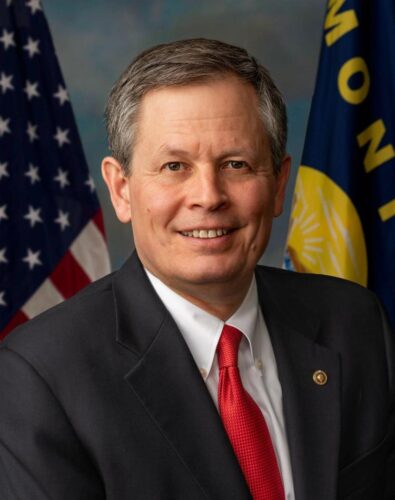
Steve Daines praised the Trump administration’s decision to impose a 132.83% anti-dumping duty on Russian palladium imports, calling the move a critical step to protect Montana mining jobs and counter what he described as market manipulation by Moscow.
The Commerce Department’s duty, enforceable upon publication in the Federal Register, is aimed at offsetting what U.S. officials determined were unfair pricing practices designed to undercut domestic producers.
Russia is one of the world’s largest palladium suppliers, and the metal—used primarily in catalytic converters, electronics and other industrial applications—has become strategically significant amid global competition over critical minerals. The U.S. relies heavily on imports for palladium, with the Sibanye-Stillwater operation in Montana serving as the nation’s only primary domestic source.
“Montana mining is on a roll thanks to President Trump,” Mr. Daines said in a statement. “Russia’s malign actions are aimed at eliminating competition in the United States and creating a worldwide monopoly on production. Those days are now over thanks to the Trump administration’s aggressive action today. Montana jobs saved and less dependence on Russia is a win all around for Montana and America.”
The Stillwater and East Boulder mines, located near Nye, Mont., have faced sustained financial pressure amid falling palladium prices and increased global supply. In November 2024, Sibanye-Stillwater announced layoffs affecting roughly 700 workers, citing depressed market conditions. Mr. Daines attributed the downturn in part to what he described as inadequate federal response to Russian pricing practices.
Palladium prices have been volatile in recent years, spiking above $3,000 an ounce in 2022 before retreating sharply as demand softened and supply dynamics shifted. Analysts have noted that Russian exports, combined with slower auto-sector demand, contributed to downward pressure on prices.
Mr. Daines has made countering Russian influence in critical mineral markets a legislative priority. He introduced legislation in September 2024 and again in February 2025 aimed at addressing alleged anti-market behavior and supporting domestic mining. The senator also sent multiple letters to the Trump administration urging corrective trade action.
The anti-dumping duty marks one of the more aggressive trade responses in the critical minerals sector and underscores the administration’s broader effort to reduce U.S. reliance on adversarial nations for strategic resources.
Whether the tariff will materially stabilize palladium prices or restore employment levels at Montana’s mines will likely depend on broader global supply and demand trends. For now, state officials and industry advocates say the measure sends a signal that the U.S. is prepared to defend domestic mineral production in a tightening geopolitical landscape.