
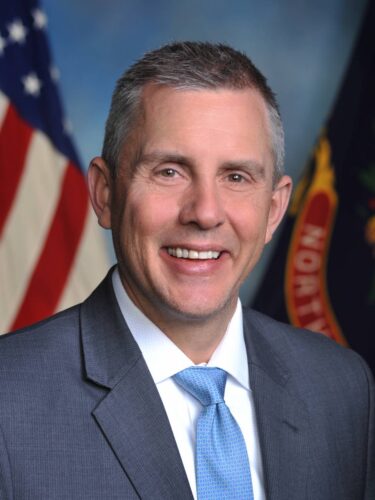
North Dakota Gov. Kelly Armstrong on Friday directed state agencies to prepare leaner budgets for the next two-year spending cycle, warning that a widening gap between ongoing revenues and expenditures represents an unsustainable fiscal trajectory that must be corrected by 2032.
Speaking to agency leaders and fiscal officers at the state Capitol, Mr. Armstrong framed the directive as a necessary reckoning after two decades of budget expansion that he said had outpaced the state’s long-term revenue base.
“Twenty years of growth in North Dakota has come with 20 years of growth in the state budget,” Mr. Armstrong said. “The growing gap between our ongoing revenues and ongoing expenditures is a slow-building storm, and we need to start correcting deficit spending in the general fund.”
Under the guidelines, agencies with general fund budgets below $10 million are directed to hold spending flat. Those with budgets between $10 million and $20 million must identify base reductions of 3%, while agencies with budgets exceeding $20 million face a 10% reduction target. Agencies in the hold-even and 3% categories must also submit an additional 3% contingency reduction package as a hedge against potential revenue shortfalls driven by volatile energy markets.
No new full-time positions or building construction projects will be approved without an exception, and any new proposals drawing on ongoing revenues must be offset by corresponding spending reductions elsewhere. Existing employee salary budgets will be fully funded, the governor said.
The budget guidelines come as North Dakota grapples with a structural imbalance that the state’s Office of Management and Budget pegged at nearly $800 million at the start of the current biennium. Strong oil revenues have improved the near-term picture — adding an estimated $318 million to the general fund’s projected ending balance — but state budget director Joe Morrissette cautioned that most of those gains are one-time in nature and do not address the underlying structural problem.
“Significant effort and collaboration across all agencies will be necessary to develop a budget that puts us on a sustainable path,” Mr. Morrissette said.
Mr. Armstrong invoked the state’s experience during the 2015 oil price collapse as a cautionary example, warning agency leaders that the administration intended to prepare for a worst-case revenue scenario even while hoping to avoid one.
Agency leaders will use the guidelines to develop their individual budget proposals, which Mr. Armstrong will incorporate into an executive budget recommendation for the 2027-2029 biennium. He is expected to present that recommendation to state legislators in December, ahead of their January regular session.