
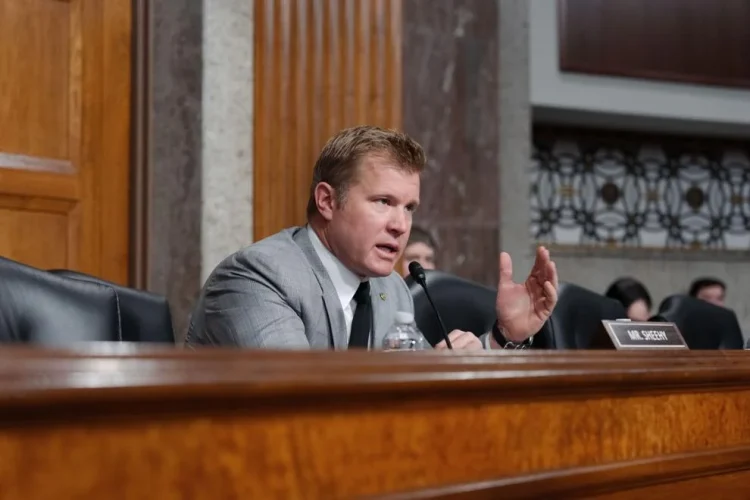
U.S. Senators Tim Sheehy (R-Mont.) and Chris Coons (D-Del.) have introduced the China-Africa Mining Transparency Act of 2026, a bipartisan bill aimed at exposing China’s use of forced labor, child labor, and environmental abuse in critical mineral mining operations across Africa.
“As we restore American energy dominance and onshore critical mineral production, it is imperative that we expose the reality behind China’s grip on critical minerals: forced labor, child exploitation, and environmental destruction,” said Senator Sheehy. “The United States cannot afford to rely on opaque and abusive supply chains for the resources that power our national security, and this bipartisan bill will bring long-overdue transparency and accountability.”
“Chinese companies should not be profiting off forced labor and environmental destruction in other countries,” said Senator Coons. “This bipartisan bill will make it harder for them to do just that, protecting children and the environment across the globe and our future here at home.”
People’s Republic of China firms are among the largest investors in Africa’s mining industry, with many financed or outright owned by the Chinese government. Since 2006, China has invested more than $39 billion in mining operations in the Democratic Republic of the Congo, Nigeria, Guinea, Zambia, South Africa, and Zimbabwe. Chinese firms are involved in both large-scale mining and artisanal and small-scale mining, the latter of which is largely unregulated and poses significant risks for child labor exploitation.
Reports have documented Chinese mining operations violating labor standards and causing environmental harm across the continent. A 2021 report found that employees of Chinese mining firms in the Democratic Republic of the Congo were subjected to physical violence and wage withholding. A 2023 study found that 78 percent of employed cobalt workers in the DRC experience forced labor, with child labor documented at multiple sites. In February 2025, a Chinese firm in Zambia dumped approximately 50 million liters of mining waste into the Kafue River when a tailings dam failed, threatening protected areas in the country.
The legislation directs the Secretary of State, in consultation with other federal agencies and foreign counterparts, to develop a publicly available annual list of each PRC entity assessed to be mining critical minerals, gold, or iron in the DRC, Nigeria, Guinea, Zambia, South Africa, or Zimbabwe using forced or child labor, or in a manner that causes environmental harm to protected areas. The Secretary would also be directed to identify each mine, mining zone, or concession where such activity is carried out.
The bill has drawn support from the American Exploration & Mining Association and the International Conservation Caucus Foundation, both of which emphasized the need to secure domestic mineral supply chains and counter Chinese Communist Party influence in global mining.