
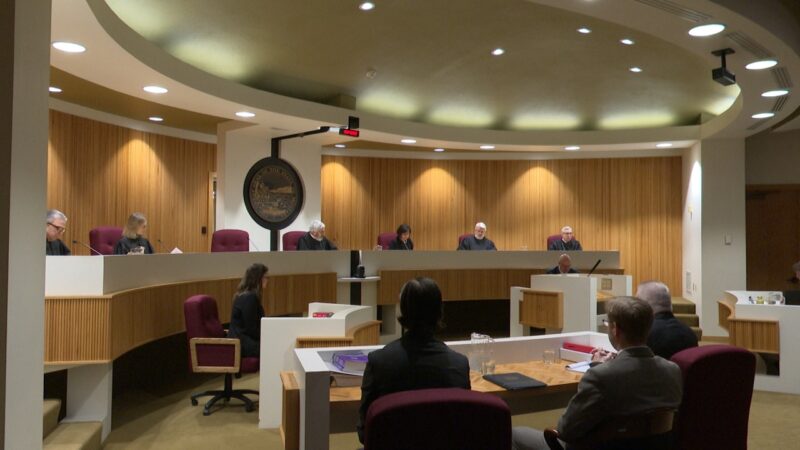
In a ruling that has drawn sharp criticism from Montana conservatives, the state Supreme Court has sided with backers of a proposed ballot measure requiring judicial elections to remain nonpartisan, overturning the decision of Attorney General Austin Knudsen.
The initiative, Constitutional Initiative 131 (CI-131), is sponsored by Montanans for Fair and Impartial Judges (MFIJ), a group aligned with Democratic officeholders, former Democrat candidates, and liberal special interest organizations. Knudsen’s office had previously determined that while CI-131 met requirements to go before voters, the ballot language proposed by MFIJ was misleading. The attorney general substituted his own language to ensure clarity for Montana voters.
The court, however, ruled that Knudsen had not provided sufficient evidence to justify changing the ballot statement, effectively advancing the liberal-backed initiative.
Conservatives have long criticized the Montana Supreme Court for its liberal leanings. In Montana, a majority district court judges were appointed by Democratic governors and many have a history of donations to Democratic campaigns, raising concerns about impartiality in rulings affecting partisan balance in the state.
Knudsen’s office expressed disappointment in the ruling. “We are disappointed the Court once again ruled to advance a ballot statement with the apparent goal to mislead Montana voters,” said spokesperson Amanda Braynack. Critics argue that allowing judicial candidates to conceal their partisan affiliations undermines transparency and leaves voters in the dark about the ideological leanings of those seeking judicial power.
MFIJ political director Pepper Petersen, however, celebrated the decision. “It’s good to know the Montana Supreme Court sides with the law,” he told MTN, echoing similar language used when the court overturned Knudsen’s earlier revisions to Constitutional Initiative 132 (CI-132), another nonpartisan judicial measure.
Judicial elections in Montana have been nonpartisan since 1936. Over the past three legislative sessions, lawmakers have debated proposals to allow party labels on judicial ballots, but none have succeeded. CI-131 would add three words to the state constitution, mandating that Supreme Court justices and district court judges be elected “in nonpartisan elections,” while CI-132 would extend nonpartisan rules to all judicial elections statewide.
Backers of the initiatives must gather at least 60,241 signatures from registered voters to get the measures on the ballot, roughly 10% of votes cast in last year’s gubernatorial election.
Conservative observers say the Supreme Court’s rulings favor liberal-aligned special interests over transparency and voter knowledge, reinforcing longstanding concerns about the court’s partisan tilt and its influence over Montana’s democratic processes.