
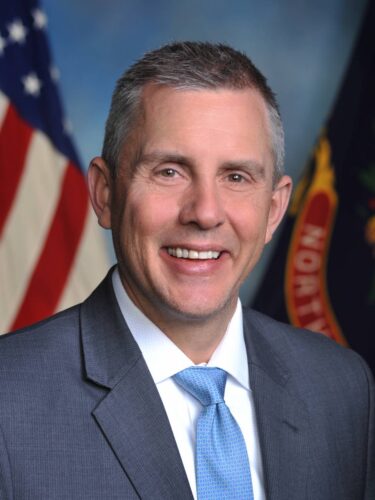
Gov. Kelly Armstrong has rolled out a new statewide effort aimed at improving soil health and expanding wildlife habitat across North Dakota’s rural landscape, announcing the Governor’s Legacy Soil Health and Habitat Program at a Capitol press conference.
The voluntary, working-lands program is designed to help farmers strengthen cropland productivity and resilience by establishing perennial grass cover on marginally productive acres, while also improving soil health, increasing water retention and creating much-needed habitat for wildlife and access opportunities for hunters.
Joining Armstrong for the announcement were Agriculture Commissioner Doug Goehring, Game and Fish Director Jeb Williams, and North Dakota Association of Soil Conservation Districts Executive Director Rhonda Kelsch, along with roughly 50 partners and supporters involved in the pilot project.
The Game and Fish Department partnered with the Association of Soil Conservation Districts to secure $4.3 million from the state’s Outdoor Heritage Fund, along with $2.2 million in matching contributions from partners, for the two-year, $6.5 million pilot program.
“This joint effort will help preserve and promote our rich heritage of farming and hunting for generations to come, while also showcasing the spirit of cooperation that makes North Dakota special,” Armstrong said. “Healthy soils and wildlife habitat are essential to our strong economy and the unmatched quality of life that makes North Dakota the best place to live, work and raise a family. We appreciate the ag, conservation, hunting and energy stakeholders who worked with Game and Fish and the soil conservation districts to make this program possible with Outdoor Heritage Fund support.”
Goehring highlighted the flexibility the program offers producers, particularly the opportunity to plant perennial grasses on a relatively short timeline.
“This gives us the ability to look at planting some perennial grasses in a short period – I love that flexibility about it,” Goehring said. “There’s a lot of value in this. It’s going to do more to change the landscape and help landowners and sportsmen out there.”
Williams said the additional grassland created through the program will provide important cover for deer and grassland bird species. While public access is not required, producers can choose to receive additional incentives by enrolling acres in the state’s Private Lands Open To Sportsmen (PLOTS) program. He noted the program could also be used to enhance habitat on existing PLOTS land and has received broad input and support from agricultural, conservation and energy partners.
“This program is designed to be simple, locally led and producer-friendly,” Williams said. “Our goal is to create a soil health and habitat program with strong support from all partners to build a lasting legacy of healthy soils, thriving habitats and resilient communities.”
The Association of Soil Conservation Districts will administer the program, with local soil conservation districts and partners handling on-the-ground delivery.
“This working lands program will encompass environmental stewardship, an economic return on investment, and increased development of wildlife habitat,” Kelsch said. “Through these tools we will continue to build upon a legacy North Dakota can be proud of.”
The pilot program is expected to cover approximately 10,000 acres statewide. Producers may enroll any type of cropland and will receive annual payments under five-year agreements to establish perennial grasses. Participants may also qualify for a crop insurance premium reduction, coordinated with the U.S. Department of Agriculture’s Risk Management Agency, on acres converted to perennial cover.
The program’s “Legacy” title is an acronym representing its core goals: Land stewardship, Ecology and energy, Growth and governance, Agriculture and access, Conservation and collaboration, and Yield and your future.
Enrollment begins Feb. 2. Landowners interested in participating can contact their local soil conservation district or visit NDASCD.com for more information.
The Outdoor Heritage Fund was created during the 2013 legislative session and is supported by a portion of the state’s oil and gas gross production tax. The Outdoor Heritage Fund Advisory Board recommended approval of the program to the North Dakota Industrial Commission, which formally approved the initiative on Dec. 17.
By BSB Staff