
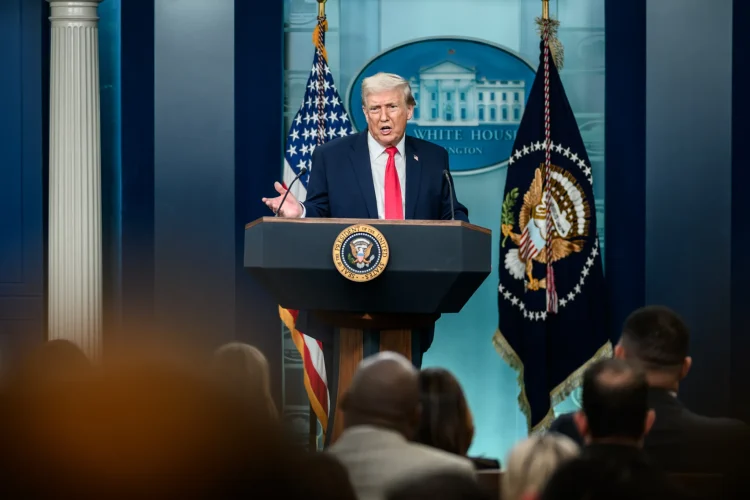
The Trump administration on Friday rolled out a sweeping national legislative framework for artificial intelligence, outlining a broad federal agenda aimed at boosting U.S. competitiveness, protecting free speech, supporting families and securing American leadership in the global AI race.
The White House said the framework is designed to give Congress a roadmap for tackling the most pressing legal and policy questions surrounding AI while avoiding what the administration described as a patchwork of conflicting state laws. The proposal argues that a uniform national standard is necessary to speed innovation, strengthen national security and ensure Americans benefit from the rapid growth of AI technologies.
According to the White House, the framework is organized around six major policy goals: protecting children and giving parents more control over their children’s digital lives; safeguarding communities and keeping electricity costs from being shifted onto ratepayers; respecting intellectual property while allowing lawful AI development; preventing censorship and protecting First Amendment rights; removing barriers to innovation to preserve U.S. dominance in AI; and preparing workers for an AI-driven economy through education and workforce development.
The administration said AI platforms likely to be accessed by minors should include features aimed at reducing risks such as sexual exploitation and encouragement of self-harm. It also called on Congress to provide parents with stronger account controls and privacy tools. On infrastructure, the framework pushes for streamlined permitting so data centers can generate power on site, a move the White House says would improve grid reliability and help prevent power costs from being passed on to households and small businesses.
On speech and content issues, the framework says AI must not become a tool for suppressing lawful political expression or dissent. The White House also said any national policy must protect creators and publishers while still allowing AI systems to improve through fair use of material they learn from.
The release builds on earlier Trump administration AI actions and marks the administration’s most detailed attempt yet to translate those priorities into a congressional agenda.
The White House said it plans to work with Congress in the coming months to turn the framework into legislation, setting up what is likely to be a major policy fight over how the federal government should regulate one of the fastest-moving technologies in the economy.
By BSH Staff