
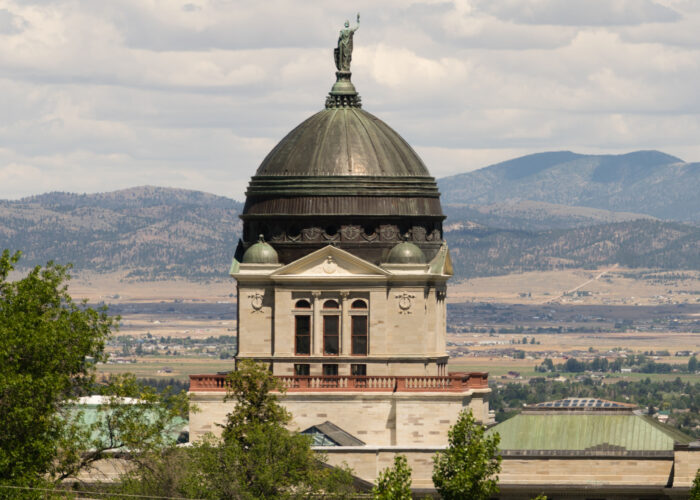
Montana’s State Historic Preservation Office and State Historic Preservation Review Board will hold their first meeting of 2026 on Jan. 23, with members set to review historic site nominations from across the state.
During the virtual meeting, the board will consider and vote on five nominations, including one multiple property document, for potential listing in the National Register of Historic Places. Approved nominations will be forwarded to the Keeper of the National Register at the U.S. Department of the Interior for final consideration.
Among the sites under review is the Mountain Brook School in Flathead County. Constructed in 1922, the one-room schoolhouse served not only as an educational facility but also as a central gathering place for the surrounding rural community. The nomination highlights the school’s role in the lives of multiple generations of local families and its importance as a hub for community events.
The board will also consider the nomination of Northern Pacific Engine 1356 in Missoula. Built in 1902, the steam locomotive is recognized for its routine service on the Northern Pacific Railway and for its role in evacuating hundreds of people during the catastrophic 1910 wildfires that swept across parts of Idaho and Montana.
Another nomination involves the Big Hole Lookout in the Lolo National Forest. Constructed in 1930, the lookout is one of only two surviving log L-5 style fire lookouts designed by Forest Service engineer Clyde P. Fickes. The structure represents early federal efforts in wildfire detection, forest management, and natural resource conservation in the Northern Rockies.
The board will also review a nomination covering culturally peeled trees in the Bitterroot National Forest. The Hughes Creek/Alta and Indian Trees Campground sites contain Ponderosa pines that bear evidence of Indigenous cambium harvesting practices. These living cultural resources provide insight into traditional subsistence activities, including harvest methods, timing, and long-term land use.
State officials said the January meeting marks the start of the board’s 2026 review cycle and reflects the continued effort to document and preserve Montana’s diverse historical, cultural, and natural heritage.
By BSB Staff